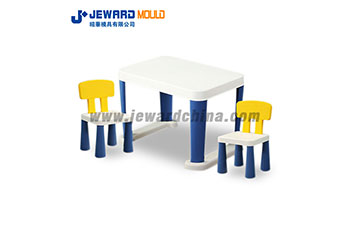
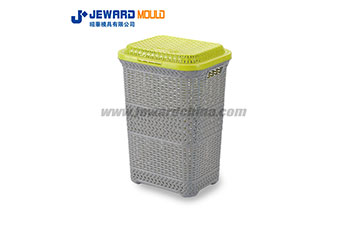
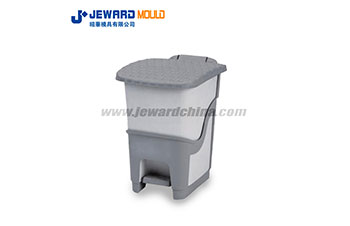
In modern manufacturing, appearance, durability, and branding are just as important as product functionality. This is especially true in industries such as packaging, consumer electronics, automotive parts, home appliances, and cosmetics. Among the most advanced decoration technologies today are in mold labeling (IML) and in mold decorating (IMD).
Although these two technologies are often confused, they serve different purposes and industries. Understanding the differences between in mold labeling and in mold decorating can help manufacturers choose the most efficient and cost-effective solution for their products.
This guide explains the in mold labeling process, explores how IMD in mold decoration works, compares their advantages and limitations, and helps you determine which technology is right for your project.
Injection Molding In mold labeling (IML) is a manufacturing process where a pre-printed label is inserted into a mold before plastic injection or blow molding takes place. During molding, the label permanently bonds with the plastic product, becoming an integrated part of the final item.
Unlike traditional stickers or post-printing methods, the label cannot peel off because it fuses directly with the molded plastic surface.
For companies looking for a reliable in mold labeling supplier, brands like Jeward provide customized mold solutions and production expertise for high-quality IML manufacturing.
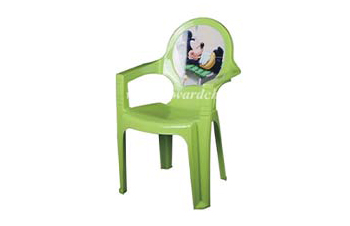
In mold decorating (IMD) refers to a broader decorative technology where films, graphics, textures, conductive circuits, or functional coatings are integrated into plastic parts during molding.
Unlike IML, which mainly focuses on labels and packaging graphics, IMD in mold decoration is commonly used for high-end industrial and electronic products where aesthetics and functionality are equally important.
Although both technologies integrate decoration into the molding stage, there are major differences in materials, applications, complexity, and costs.
In Mold Labeling (IML)
IML focuses mainly on:
Branding
Product information
Packaging decoration
Cost-efficient mass production
In Mold Decorating (IMD)
IMD focuses on:
Premium aesthetics
Functional surfaces
Electronic integration
High-end product design
IML Materials
PP labels
PE labels
Thin printed films
IMD Materials
Polycarbonate films
PET films
Functional conductive layers
Metallic coatings
IMD materials are usually more sophisticated and expensive.
| Feature | In Mold Labeling (IML) | In Mold Decorating (IMD) |
|---|---|---|
| Main Industry | Packaging | Electronics & Automotive |
| Appearance | Printed graphics | Premium decorative surfaces |
| Functionality | Visual branding | Functional integration |
| Cost | Lower | Higher |
| Complexity | Moderate | Advanced |
| Durability | High | Very high |
| Production Speed | Faster | Slower |
IML is ideal for colorful packaging graphics and high-volume production. However, it is relatively limited when it comes to textured surfaces or integrated functionality.
IMD allows:
Metallic finishes
Brushed textures
Backlit icons
Capacitive touch controls
3D curved surfaces
This makes IMD the preferred choice for premium products.
IML Cost Advantages
Lower tooling costs
Faster cycle times
Lower material costs
High efficiency for packaging
IMD Cost Factors
More complex tooling
Higher material expenses
Additional forming processes
Precision manufacturing requirements
For large-volume packaging production, IML is generally more economical.
Both technologies are durable because the decoration is embedded into the molded product. However, IMD often provides:
Better scratch resistance
UV resistance
Chemical resistance
Premium tactile feel
This is particularly important in automotive and electronics industries.
Choosing between in mold labeling and in mold decorating depends on your product goals, budget, and industry requirements.
You need:
High-volume packaging production
Cost-effective branding
Fast production cycles
Lightweight plastic packaging
Retail-ready graphics
Typical industries:
Food packaging
Consumer goods
Paint containers
Cosmetic jars
Working with an experienced in mold labeling supplier like Jeward can help optimize mold performance, label positioning, and production efficiency.
You need:
Premium visual effects
Functional surfaces
Touch interfaces
Automotive-grade durability
Electronic integration
Typical industries:
Automotive
Consumer electronics
Medical devices
Smart appliances
Although in mold labeling and in mold decorating are related technologies, they serve very different manufacturing goals.
In mold labeling is best for efficient, cost-effective packaging decoration and branding.
IMD in mold decoration is ideal for premium products requiring advanced aesthetics and functional integration.
Understanding the differences between IML and IMD allows manufacturers to select the right process based on performance, appearance, durability, and budget.
For businesses seeking high-quality mold manufacturing and professional support, partnering with an experienced in mold labeling supplier such as Jeward can significantly improve production quality and long-term efficiency.
Yes. In mold labeling offers better durability because the label becomes part of the molded product itself. Traditional stickers may peel, wrinkle, or fade over time.
Yes. In mold labeling is highly suitable for curved and complex container shapes, including round tubs, buckets, and custom packaging.
Automotive, electronics, medical devices, and home appliance industries are among the largest users of IMD technology.
 English
 français
 Deutsch
 Español
 italiano
 русский
 português
 العربية
 Türkçe