In today’s competitive packaging industry, brands need packaging solutions that combine durability, visual appeal, cost efficiency, and sustainability. This is why in mold labeling (IML) has become one of the fastest-growing decoration technologies for plastic packaging and consumer products.
From food containers and household products to automotive components and medical packaging, the in mold labeling process delivers premium graphics directly fused into molded plastic parts. Unlike traditional labels that are applied after production, IML integrates the label into the product during molding, creating a seamless and highly durable finish.
For manufacturers seeking long-lasting branding and high-speed production efficiency, working with a reliable in mold labeling supplier such as Jeward can significantly improve product quality and market competitiveness.
In mold labeling is a manufacturing technique in which a pre-printed label is placed inside a mold before plastic injection molding, blow molding, or thermoforming begins. During the molding process, the molten plastic bonds directly with the label, permanently embedding the graphics into the final product.
The result is a finished part with integrated decoration that cannot easily peel, scratch, or fade.
IML is widely used in industries where attractive packaging and product durability are critical, including:
Food and beverage packaging
Cosmetics and personal care
Household products
Automotive interiors
Medical packaging
Consumer electronics
Compared with traditional sticker labels or direct printing, in mold labeling provides superior visual quality and structural durability.
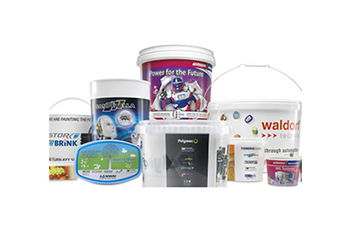
The in mold labeling process combines printing technology and plastic molding into a single manufacturing operation. Below is a step-by-step overview of how it works.
The process starts with creating high-resolution label artwork. Labels are usually printed using:
Gravure printing
Offset printing
Flexographic printing
Digital printing
These printing methods ensure vibrant colors, sharp graphics, and consistent branding.
The labels are commonly produced using polypropylene (PP) or similar plastic materials that are compatible with the molded product.
After printing, labels are cut into precise shapes and stacked for automated handling.
Anti-static treatment or robotic systems are often used to ensure accurate placement inside the mold.
A robotic arm or electrostatic system places the label into the mold cavity before molten plastic is injected.
Proper alignment is critical because label positioning directly affects the final appearance of the product.
Molten plastic is injected into the mold. Heat and pressure fuse the label with the plastic surface.
Because the label becomes part of the product itself, the final decoration is highly resistant to:
Moisture
Scratches
Chemicals
UV exposure
Wear and tear
Once the plastic cools and solidifies, the finished product is ejected from the mold with the label permanently embedded.
No secondary labeling process is required, improving manufacturing efficiency.
In mold labeling offers numerous advantages over traditional labeling methods.
Since the label becomes part of the molded product, it will not peel, wrinkle, or detach easily.
This makes IML ideal for products exposed to:
Refrigeration
Moisture
Frequent handling
Harsh transportation conditions
IML enables photo-quality graphics, metallic finishes, matte textures, and transparent effects.
Brands can achieve a high-end shelf appearance that attracts consumers and improves product recognition.
Traditional labeling requires a secondary operation after molding. In contrast, the in mold labeling process combines molding and decoration into one step.
Benefits include:
Faster production cycles
Lower labor costs
Reduced handling
Improved consistency
Many IML products use the same material for both the label and container, improving recyclability.
For example:
PP labels on PP containers
PE labels on PE products
This mono-material structure simplifies recycling compared to traditional adhesive labels.
Because the label is fused with the product surface, it performs well in demanding environments.
IML packaging is commonly used for:
Ice cream containers
Detergent packaging
Cosmetic jars
Industrial chemical containers
In mold labeling is not suitable for every project, but it is an excellent solution in many situations.
You should consider IML when:
If your brand relies on shelf appeal and premium product presentation, IML delivers superior aesthetics compared to stickers or direct printing.
Products exposed to water, refrigeration, chemicals, or abrasion benefit greatly from the durability of IML.
The efficiency of the in mold labeling process makes it ideal for high-volume manufacturing.
Many global brands now choose IML to support recyclable mono-material packaging strategies.
Because decoration occurs during molding, manufacturers can reduce overall production steps.
In mold labeling has become one of the most effective packaging decoration technologies for modern manufacturing. By combining high-quality graphics, exceptional durability, production efficiency, and sustainability, the in mold labeling process helps brands create premium products that stand out in competitive markets.
Whether you manufacture food containers, cosmetic packaging, or industrial components, partnering with an experienced in mold labeling supplier like Jeward can help optimize both product quality and manufacturing performance.
As sustainability and branding continue to shape consumer expectations, in mold labeling will remain a critical solution for innovative packaging design and advanced plastic manufacturing.
The most common materials include polypropylene (PP), polyethylene (PE), polystyrene (PS), and PET films. PP is the most widely used because of its excellent compatibility with injection molding and recyclability.
IML focuses primarily on packaging labels integrated into molded plastic products, while IMD is commonly used for decorative and functional industrial surfaces such as automotive interiors and electronic panels.
Key considerations include material compatibility, mold structure, label thickness, graphic distortion, robotic placement accuracy, and production automation.
 English
 français
 Deutsch
 Español
 italiano
 русский
 português
 العربية
 Türkçe