Modern manufacturing demands products that are lighter, faster to produce, cost-efficient, and environmentally friendly. This is exactly why thin wall injection molding has become one of the most important technologies in the plastics industry.
From food packaging and medical containers to consumer electronics and automotive parts, manufacturers increasingly rely on thin wall molding to reduce material consumption while maintaining product strength and performance.
Thin wall injection molding is a specialized plastic injection molding technology used to manufacture plastic parts with extremely thin wall sections, typically less than 1 mm thick.
Compared with conventional injection molding, thin wall injection molding requires:
Higher injection speeds
Higher injection pressure
Advanced mold cooling systems
Precision mold engineering
Specialized injection molding machines
The goal is to produce lightweight plastic parts with shorter cycle times and lower material usage while maintaining excellent dimensional stability.
Generally, a plastic component is considered “thin wall” when the wall thickness-to-flow-length ratio exceeds standard molding capabilities.
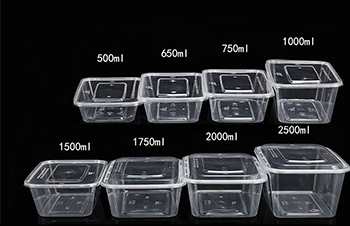
The thin wall injection molding process involves several highly controlled manufacturing stages to ensure rapid filling and consistent part quality.
The process begins with precise part design. Engineers must carefully optimize:
Uniform wall thickness
Rib structures
Gate location
Draft angles
Material flow behavior
Even a small inconsistency in wall thickness can cause defects such as warping, short shots, or sink marks.
Thin wall molds require exceptional precision.
Key mold design elements include:
High-speed filling capability
Efficient cooling channels
Precision venting systems
Durable mold steel
Balanced runner systems
Professional thin wall mould suppliers such as Jeward focus heavily on mold durability, cooling efficiency, and dimensional precision because thin wall molds operate under extremely high pressure and speed.
Material choice directly affects molding performance.
Common materials include:
Polypropylene (PP)
Polyethylene (PE)
Polystyrene (PS)
PET
Engineering plastics
Polypropylene is widely used because it offers:
Excellent flow characteristics
Low cost
Good flexibility
Fast cycle performance
Materials used in thin wall molding typically require a high melt flow index (MFI).
This is the most critical stage.
Because the walls are extremely thin, molten plastic cools very quickly. The machine must inject material at very high speed before the resin solidifies.
Key parameters include:
High injection velocity
High cavity pressure
Accurate shot control
Stable melt temperature
Efficient cooling determines productivity.
Advanced cooling systems help:
Reduce cycle time
Improve dimensional stability
Minimize warpage
Increase production efficiency
In many cases, thin wall products can achieve cycle times of only 3–5 seconds.
After cooling, parts are ejected and inspected for:
Flash
Short shots
Warpage
Cracks
Dimensional consistency
Automated inspection systems are often used in high-volume production.
Thin wall molding differs significantly from traditional injection molding.
Here are the major characteristics:
Products often have wall thicknesses below 1 mm while still maintaining structural integrity.
The process is optimized for mass production with extremely short cycle times.
This allows manufacturers to produce millions of parts efficiently.
Reduced material usage lowers product weight and shipping costs.
This is especially valuable in:
Packaging
Automotive
Consumer electronics
Thin wall parts require exceptional accuracy because even small dimensional variations can cause defects.
Thin wall molds require:
Superior cooling systems
Precision machining
Wear-resistant steel
Optimized gate design
Reduced resin usage and faster cycle times create major long-term savings.
Thin wall molding is ideal for large-volume manufacturing industries such as food packaging.
Modern thin wall molding technologies produce smooth, precise, visually attractive parts.
The process works well with:
Robotic systems
Automated packaging lines
Smart manufacturing systems
Thin wall technology supports modern environmental goals through material reduction and energy efficiency.
Choosing the right manufacturing partner is essential for project success.
When evaluating thin wall mould suppliers, consider the following factors:
Look for suppliers with extensive thin wall mold design expertise.
High-precision CNC machining and advanced quality control are critical.
Efficient cooling systems directly affect production speed and part quality.
Reliable suppliers provide:
Mold flow analysis
Design optimization
Production troubleshooting
A trusted supplier like Jeward can help manufacturers improve production efficiency, reduce defects, and achieve stable long-term manufacturing performance.
Thin wall injection molding has transformed modern plastic manufacturing by enabling lightweight, cost-efficient, and high-speed production.
From food packaging to advanced industrial applications, the technology provides substantial advantages in sustainability, efficiency, and scalability.
However, successful implementation requires:
Advanced engineering
Precision mold manufacturing
Optimized process control
Reliable manufacturing partners
Working with experienced thin wall mould suppliers such as Jeward helps manufacturers achieve superior product quality, shorter cycle times, and long-term production reliability.
Typically, plastic parts with wall thicknesses below 1 mm are considered thin wall components, although the exact definition depends on the material and flow length ratio.
Polypropylene (PP) is one of the most widely used materials because of its excellent flowability, cost efficiency, and fast processing characteristics.
Food packaging, medical devices, electronics, automotive, and consumer goods industries heavily rely on thin wall molding.
 English
 français
 Deutsch
 Español
 italiano
 русский
 português
 العربية
 Türkçe